

Why Everything Gotta Be Top 10?
a real look at how the internet turned opinions into competitive sport

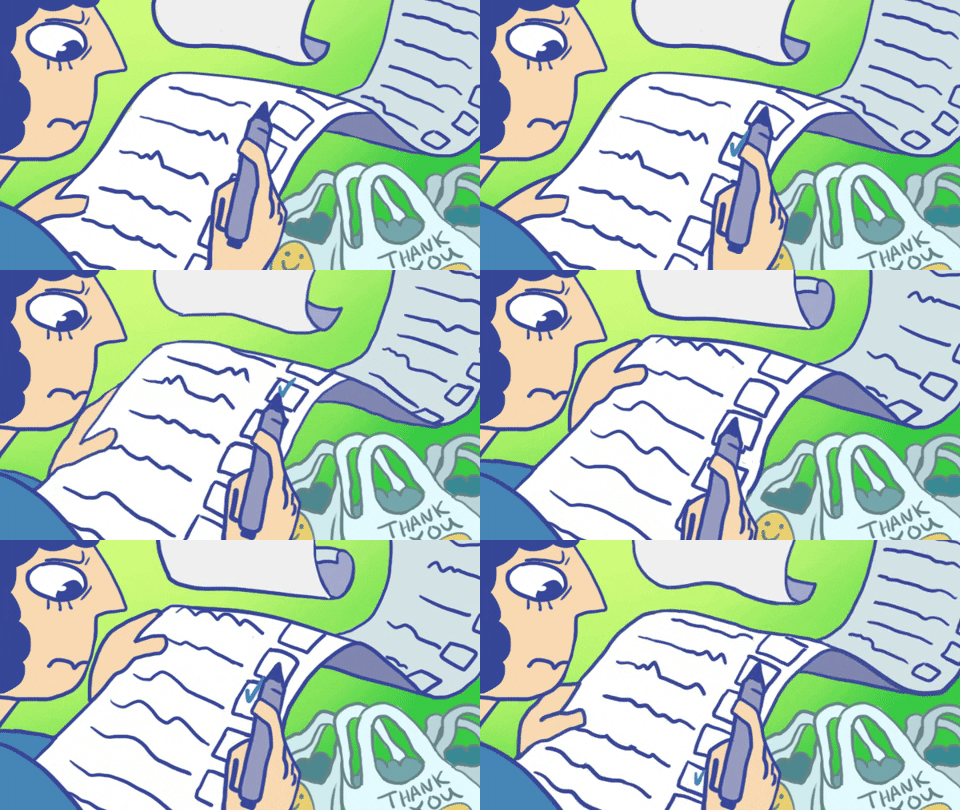
Ranking culture got us all acting like life is one giant leaderboard. Everything needs to be numbered, tiered, bracketed, and judged like life depends on it. Best burger in the city. Top ten coffee shops for creatives. Five skincare products that changed my life. Twenty three movies you need to watch before you die, which is wild because lately I haven’t watched as much movies as I’ve done before in the past.
At some point we stopped just liking things and started auditing them. You can’t just eat a sandwich anymore. Now the sandwich has to compete with every other person’s best sandwich list. It’s not enough for it to be good. It has to be the best sandwich in a fifteen mile radius according to six influencers, four Reddit threads, and one superrrr opinionated newsletter writer. Don’t get me wrong - at this point we’ve all gotten got by the rankings. There’s nothing wrong with it of course to take recommendations to experience in the future. But it’s when it’s a countdown of sorts. “My number 5,4,3… of Mexican restaurants in [said city].
This is ranking culture - where every experience gets put into competition whether it asked for that pressure or not. And honestly, I understand why this happened. Humans like order and humans like categories. Our brains hate chaos almost as much as they hate choosing where to eat with five hungry friends. Too many options make people freeze.
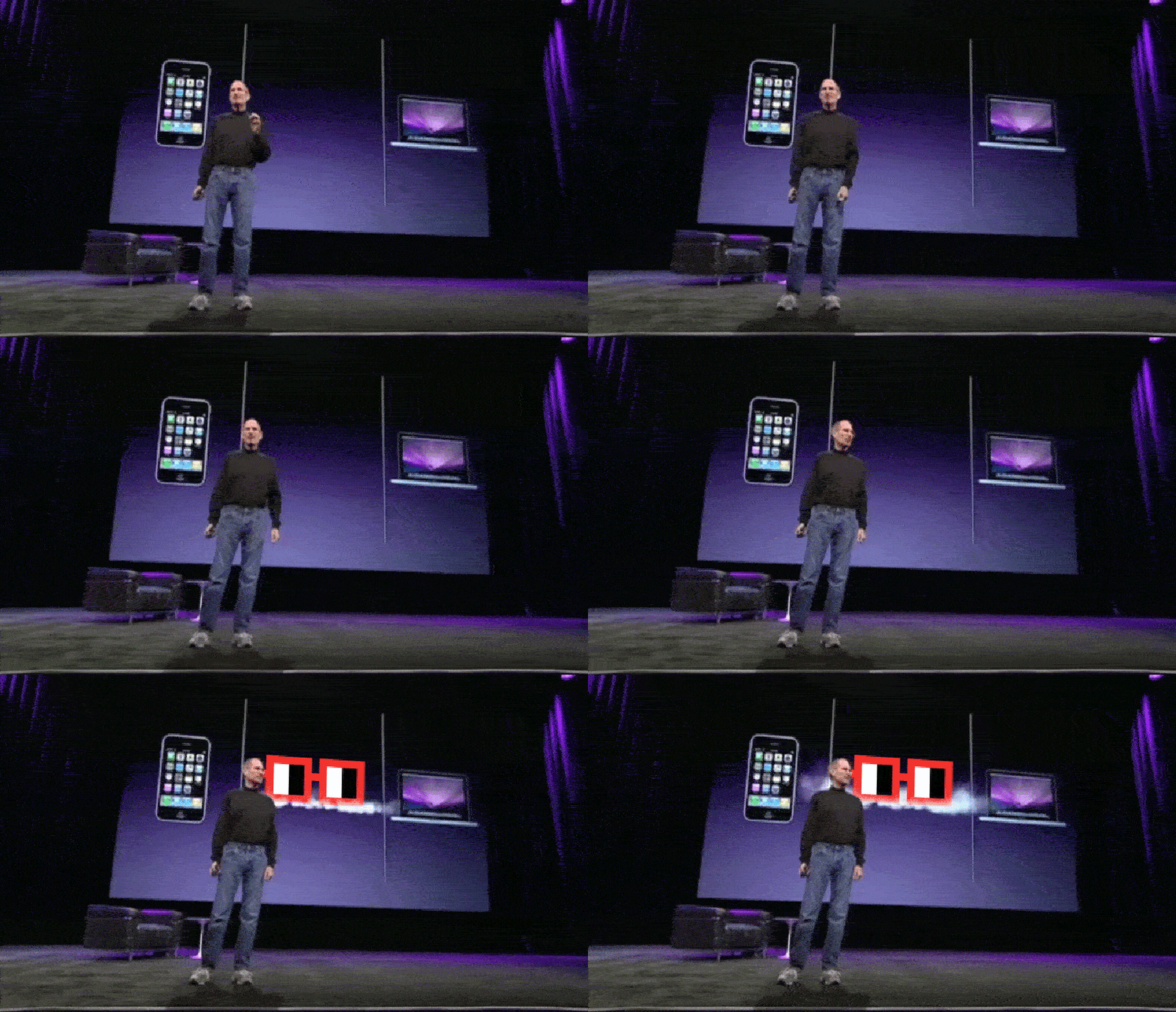
I get why Steve Jobs woke up and said fuck it, imma just throw on this black turtle neck, blue jeans, and dusty ass shoes. It’s nice and easy.
That’s why rankings feel useful because they promise clarity. Fifty ramen spots in your city? Cool, here’s the top seven according to a publication that photographs noodles like they’re shooting for a Gucci cologne campaign. Rankings tell us what matters, where to go, and what deserves our attention spans that, lets face it, is very limited at this point. In all honesty it sounds helpful but the reality is that it turned all of food culture into a competitive sport. Now everything is content bait. You can post “restaurants I enjoyed this month” and maybe people nod politely. But post “The Only Ten Restaurants in Boston That Actually Matter” and now you got all the eyes on that post. People are in the comments writing whole essays because their favorite taco spot got left off a list which was assembled by a stranger with Wi Fi and some time on their hands.
Rankings create stakes where none existed. A croissant used to just be buttery and flaky, and just fireeee. You’re there eating and minding your business. Now your favorite croissant, the one you’ve loved for a minute now, is wrestling against twelve other croissants and being judged on texture, architecture, and emotional resonance. We turned breakfast into the 90’s NBA basketball playoffs.
Food culture especially got cooked by this and there used to be more space for storytelling.
Where dishes came from.
Why ingredients matter.
How migration shaped cuisine.
The emotional power and resonance of recipes passed down through generations.
The problem with ranking culture is that it tries to make taste feel objective. But taste is personal, emotional, and truly tied to context.
That’s the key. That’s the caveat.
I’ll take a ranking from someone but it has to be through the lens of someone I know, someone who I deeply trust their opinion on food because they genuinely love it and their not being paid to say it. The best Colombian food you ever had might not even be all that fire. But maybe and more than likely the suggestion from your actual friend who’s Colombian will be wayyyyy better than the one you chose from the person who isn’t Colombian. The internet acts like one person can declare the absolute best taco in a city filled with yearssss of culinary history, immigrant communities, and family recipes protected with the seriousness of classified government documents that will never be revealed.
Then comes the fatigue. We are absolutely drowning in lists like best books, best bars, best sneakers under two hundred dollars, best candles for people pretending they have their life together. And every app feeding this to us. Pun intended.
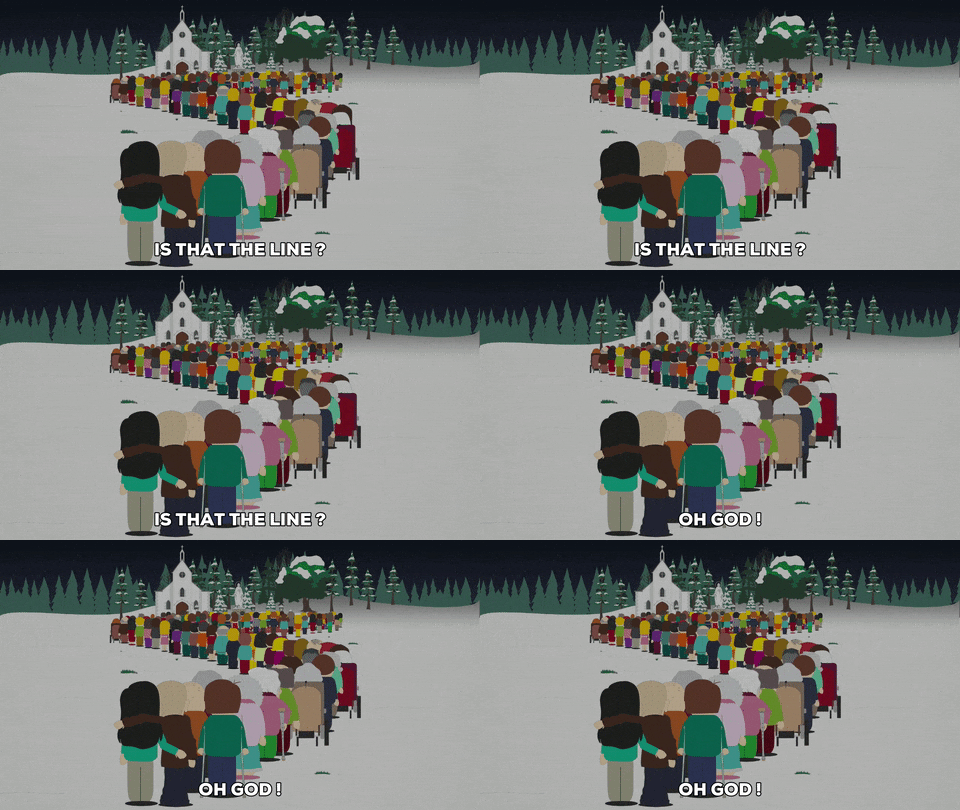
And instead of feeling more informed - there’s an over arching feeling of tiredness. How many times can you save a post and not act on actuallyyyyy visiting that pastry shop or restaurant. Because when everything is optimized nothing feels discovered anymore. You go somewhere because it was ranked number one and the whole vibe is already exhausted and gutted out. There’s a line around the block and everyone is taking the same photo. Nobody even looks happy or if they do look happy it’s almost like a fake happy. You’re not having an experience anymore but you’re participating in a cultural assignment.
And because something was hyped as the best your expectations become ridiculous. This burger better teach me forgiveness. This pastry better repair my relationship with vulnerability. Then you finally eat it and it’s like iightttt this is a respectable sandwich. But now you’re disappointed not because it was bad but because ranking culture promised enlightenment and instead it just delivered a solid lunch.
That is not the sandwich’s fault.
Ranking culture also turns taste into identity performance. People don’t just want to enjoy things but they want to enjoy the right things. There’s social capital in having superior taste. Not just knowing a cool restaurant, but knowing it before it was featured in an article and flooded by people who didn’t really care. And I say this with love because I too love and adore food. I have absolutely acted like discovering a noodle spot was equivalent to finding Atlantis. But that’s when you gotttta reel it in and understand you just found a nice solid spot.
But the internet rewards that behavior. Algorithms love certainty and they don’t want nuance or optionality. They don’t want “here are a few places depending on your mood, budget, neighborhood, and tolerance for waiting in line.” That is too complicated and honestly too human. They want absolutes and the best, the worst, the overrated, the underrated.
But maybe the biggest loss here is curiosity.
The more we rely on rankings, the less we trust ourselves and go out and find that one spot that maybe we’ve seen a ton but never got a chance to stop in. Or maybe it’s that one spot that’s actuallyyyyy a hidden gem. We stop wandering and we stop taking chances and trying things. We stop walking into random places just because they smell good or because somebody local told us. Word of mouth still has soul. It is THE soul of finding things out. A friend telling you to try a tiny spot with incredible noodles feels more alive and true and real than any article titled “Seven Hidden Gems You Must Visit Before You Die.”
Not because hidden gems are magical but because discovery still matters. Maybe we need lower stakes opinions again - not absolutes or declarations from the mountaintop. Just honest reactions. Simple stuff you know.
This cake is incredible.
These fries taste like when I used to get fast food on Fridays as a child.
That soup fixed my mood.
Not everything meaningful can be ranked. How do you compare your mom’s cooking to a tasting menu without sounding spiritually confused. It’s simply different. One nourishes your soul and the other serves foam on an expensive plate.
At the end of the day rankings aren’t evil. Lists can be useful of course and the one’s that come from the people you trust are the best! But sometimes you need somewhere to start. A ranking is not the absolute truth. It is one opinion dressed up like analytical data. Take what helps and keep moving and eat the weird thing and ignore the leaderboard. Trust yourself more.
Because if we keep letting the internet convince us every pizza spot needs to enter a tournament we’re gonna forget the whole point. Sometimes food is just supposed to be delicious, messy, comforting, surprising, and shared with people you actually like.
No medal required, I promise.